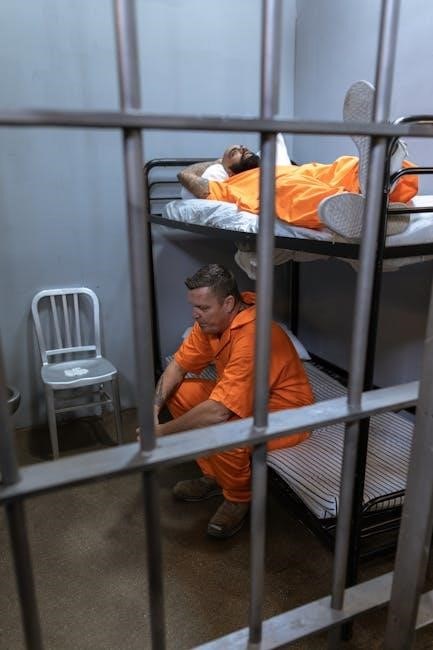
American Corrections, 13th Edition: A Comprehensive Plan
The 13th edition, published March 4, 2021, by Cengage, offers a current, balanced approach, and is available as a Kindle Edition or PDF download.
Overview of the 13th Edition
The 13th edition of American Corrections, authored by Todd Clear, Michael Reisig, and George Cole, provides a comprehensive and unbiased examination of the U.S. correctional system. This edition delves into the dynamics of contemporary corrections, offering students a thorough understanding of its multifaceted nature.

Readers will explore crucial topics, including the challenges faced by felons during reentry, and strategies for reducing recidivism. The text is available in multiple formats, including a Kindle Edition and as a readily accessible PDF download, catering to diverse learning preferences. Published by Cengage Learning, this edition—with its 640 pages—is designed to equip students with the knowledge necessary to critically analyze and understand the complexities of American corrections.
The ISBN is 9780357456538.
Authors and Publication Details
American Corrections, 13th Edition, is a collaborative work by three distinguished scholars in the field of criminal justice: Todd R. Clear, Michael D. Reisig, and George F. Cole. These authors bring a wealth of expertise and a commitment to unbiased analysis to their exploration of the American correctional system;
The book is published by Cengage Learning, a leading provider of educational materials. The publication date for this edition is March 4, 2021. It’s available in various formats, including print, and digitally as a Kindle Edition and a convenient PDF download. The ISBN for this edition is 9780357456538, facilitating easy identification and procurement for academic use.
ISBN and Format Availability
American Corrections, 13th Edition, is readily accessible through multiple channels to suit diverse learning preferences. The primary ISBN identifying this edition is 9780357456538. Additionally, an alternate ISBN, 9781337557658, is also in use.
Students and educators can acquire the text in several formats. A traditional print version is available, alongside a convenient Kindle Edition for digital reading. Notably, a highly sought-after feature is the availability of an instant PDF download, offering immediate access to the comprehensive content. Resources like textbooks.dad also offer ebook access. The book comprises 640 pages and measures 8.25 x 1 x 10.75 inches, ensuring a substantial and detailed exploration of the subject matter.
Key Themes and Approach
American Corrections, 13th Edition, distinguishes itself through a commitment to presenting a balanced and unbiased examination of the U.S. correctional system. A central theme revolves around the complexities of contemporary corrections, including the challenges faced during offender reentry.
The text doesn’t shy away from thought-provoking discussions, offering insightful perspectives on critical issues. It delves into the dynamics of the system, providing a current overview of practices and policies. The authors prioritize a realistic portrayal, avoiding simplistic narratives. The approach emphasizes understanding the multifaceted nature of corrections, encompassing historical context, philosophical underpinnings, and the impact of societal factors, making it a valuable resource for students and professionals alike.

The American Correctional System: Foundations
This edition explores the historical development and philosophical underpinnings of punishment, alongside the rise of mass incarceration within the U.S. system.
Historical Development of Corrections
The 13th edition of American Corrections delves into the evolution of correctional thought and practice within the United States. It examines the progression from early colonial approaches, focusing on punishment and retribution, through the penitentiary movement of the 19th century, emphasizing rehabilitation.
Further exploration includes the development of reformatories, probation, and parole systems, alongside the shifts in correctional philosophy throughout the 20th and 21st centuries. The text analyzes the factors contributing to the dramatic increase in incarceration rates, tracing the historical roots of mass incarceration and its lasting impact on communities.
Understanding this history is crucial for comprehending the current challenges and potential future directions of the American correctional system, as presented in this comprehensive edition.
Philosophical Underpinnings of Punishment
The 13th edition of American Corrections thoroughly examines the core philosophies driving punishment within the American legal system. It explores retribution – the idea of “just deserts” – alongside deterrence, both general and specific, aiming to discourage future crime.
The text also investigates incapacitation, focusing on removing offenders from society to protect the public, and rehabilitation, emphasizing the reformation of offenders. Critical analysis is provided on the evolving balance between these philosophies, and how they influence sentencing practices and correctional policies.
Readers gain insight into the ethical and practical considerations surrounding each approach, fostering a nuanced understanding of the complex justifications for punishment in contemporary America.
The Rise of Mass Incarceration
The 13th edition of American Corrections dedicates significant attention to the dramatic surge in incarceration rates over the past several decades, a phenomenon known as mass incarceration. The text meticulously traces the historical factors contributing to this trend, including shifts in sentencing policies – like mandatory minimums and determinate sentencing – and the “War on Drugs”.
It analyzes the impact of these policies on different demographic groups, particularly communities of color, highlighting the disproportionate representation within the correctional system. Furthermore, the book explores the social and economic consequences of mass incarceration, extending beyond the incarcerated individual to families and communities.
Readers will understand the complex interplay of political, social, and economic forces that have shaped the current state of American corrections.
Community Corrections vs. Institutional Corrections
The 13th edition of American Corrections provides a detailed comparison between community-based sanctions and traditional institutional corrections – prisons and jails. The book thoroughly examines the philosophies underpinning each approach, weighing the benefits of rehabilitation and reintegration offered by community programs against the incapacitation and punishment goals of incarceration.
It explores various community corrections strategies, including probation, parole, and alternative sentencing options, detailing their effectiveness and challenges. Conversely, the text analyzes the operational realities of prisons, covering security levels, inmate management, and the complexities of prison life.
Readers gain a nuanced understanding of the strengths and weaknesses of both systems, and the ongoing debate surrounding their optimal balance within the American correctional landscape.

Components of the Correctional System
The 13th edition details the system’s parts: police, pre-trial release, probation, parole, jails, and prisons, examining security levels and operational procedures.
Police and Pre-Trial Release
The 13th edition of American Corrections comprehensively examines the initial stages of the correctional process, beginning with the role of police in apprehending suspects and the subsequent decisions regarding pre-trial release.
It delves into the complexities of bail systems, exploring alternatives designed to reduce reliance on monetary bonds and address concerns about equity and public safety. The text likely analyzes the impact of pre-trial detention on defendants, considering factors like flight risk and potential for re-offending.
Furthermore, it probably discusses the evolving practices in pre-trial services, including risk assessment tools and supervision programs, all within the broader context of ensuring due process and minimizing unnecessary incarceration. The PDF version offers detailed insights into these critical components.
Probation and Parole
American Corrections, 13th Edition provides an in-depth exploration of probation and parole, two cornerstone components of community corrections. The text likely details the historical development of these practices, examining their philosophical underpinnings and evolving roles within the broader correctional system.
It probably analyzes the conditions of probation and parole, including supervision levels, reporting requirements, and potential sanctions for violations. The PDF version likely covers the challenges faced by individuals re-entering society after incarceration, and the programs designed to support successful reintegration.
Furthermore, it likely discusses the impact of risk assessment tools on decision-making in probation and parole, and the ongoing debates surrounding their fairness and effectiveness.
Jails and Local Correctional Facilities
American Corrections, 13th Edition comprehensively examines the crucial role of jails and local facilities within the American correctional landscape. The PDF likely details the distinct functions of these institutions, differentiating them from prisons and outlining their intake processes.
Expect a thorough discussion of jail populations – often comprised of pre-trial detainees, those serving short sentences, and individuals awaiting transfer. The text probably analyzes the challenges inherent in jail administration, including overcrowding, safety concerns, and the provision of adequate healthcare.
It likely explores the increasing focus on alternatives to incarceration for low-level offenders processed through local facilities, and the impact of these policies on jail populations.
Prisons: Security Levels and Operations
American Corrections, 13th Edition’s PDF version will likely dedicate significant coverage to the complex world of prisons, detailing the hierarchical security levels – minimum, medium, maximum, and supermax – and their corresponding operational characteristics.
Expect a detailed exploration of prison life, including inmate classification, daily routines, and the challenges of maintaining order and safety within these institutions. The text probably examines the roles and responsibilities of correctional officers, and the inherent dangers they face.
Furthermore, it will likely discuss prison programs aimed at rehabilitation, education, and vocational training, alongside the ongoing debates surrounding their effectiveness and funding.

Contemporary Issues in American Corrections
The 13th edition’s PDF examines reentry challenges, racial/ethnic impacts, gender considerations, and the juvenile justice system with unbiased examinations.
Reentry Challenges and Programs
The 13th edition’s PDF delves into the significant hurdles faced by individuals transitioning from incarceration back into society. It explores the complexities of securing housing, employment, and rebuilding social connections – all crucial for successful reintegration.
The text provides thought-provoking analyses of programs designed to assist felons during the reentry process. These programs aim to reduce recidivism by addressing the root causes of criminal behavior and equipping individuals with the necessary skills and resources.
Furthermore, the edition likely examines the systemic barriers that impede successful reentry, such as legal restrictions and societal stigma, offering a comprehensive understanding of this critical issue within the American correctional system.
The Impact of Race and Ethnicity on Corrections
The American Corrections 13th edition PDF undoubtedly addresses the disproportionate representation of minority groups within the correctional system. It likely examines historical and contemporary factors contributing to racial and ethnic disparities at every stage – from policing and sentencing to incarceration and reentry.
The text probably offers critical analyses of systemic biases, implicit biases, and the impact of discriminatory policies on communities of color. It may explore how these factors contribute to higher rates of arrest, conviction, and harsher sentencing for minority offenders.
Expect a detailed discussion of the social and economic consequences of mass incarceration on racial and ethnic communities, and potential strategies for achieving greater equity and justice within the system.
Gender and Corrections
The American Corrections 13th edition PDF will likely dedicate significant attention to the unique challenges faced by women within the correctional system. It probably explores the historical underrepresentation of women in research, leading to a historically male-centered understanding of crime and punishment.
Expect detailed analysis of the factors contributing to women’s incarceration, often linked to trauma, poverty, and substance abuse. The text will likely discuss the specific needs of incarcerated women, including reproductive health, childcare concerns, and experiences of victimization.

Furthermore, it will probably examine gender-responsive correctional practices designed to address these unique needs and promote successful reentry for female offenders.
Juvenile Justice System Overview
The American Corrections 13th edition PDF will undoubtedly provide a comprehensive overview of the juvenile justice system, differentiating it from the adult criminal justice model. Expect discussion on the historical evolution of juvenile courts, initially founded on the principle of parens patriae – the state as parent.
The text will likely detail the stages of juvenile justice processing, from law enforcement contact and intake to adjudication and disposition. It will probably explore key legal cases impacting juvenile rights, such as In re Gault, and current trends in juvenile sentencing.
Furthermore, the PDF will likely address contemporary issues like racial and ethnic disparities within the system and the ongoing debate surrounding juvenile transfer to adult court.
Specific Correctional Practices
American Corrections, 13th edition PDF examines sentencing guidelines, alternatives to incarceration, prison gangs, and correctional officer roles with unbiased examinations.
Sentencing Guidelines and Determinate Sentencing
The 13th edition of American Corrections delves into the complexities of sentencing, exploring the shift towards guidelines and determinate sentencing models. This edition provides a thought-provoking analysis of how these systems impact correctional populations and the overall justice process.
Readers gain insight into the structure and function of sentencing guidelines, understanding their intended purpose of reducing disparity and promoting fairness. The text critically examines the effectiveness of determinate sentencing in achieving its goals, considering potential unintended consequences like increased incarceration rates.
Furthermore, the PDF version of the book facilitates detailed study of these practices, offering a comprehensive overview of their historical development and contemporary application within the American correctional landscape. It encourages critical thinking about the balance between punishment, rehabilitation, and public safety.
Alternatives to Incarceration
American Corrections, 13th Edition thoroughly examines alternatives to traditional incarceration, recognizing the limitations and costs associated with extensive imprisonment. The text explores a range of options, including probation, parole, community service, restorative justice programs, and drug courts, offering a balanced perspective on their effectiveness.
The PDF format allows for in-depth study of each alternative, detailing implementation strategies, success rates, and challenges. It analyzes the suitability of these programs for different offender populations and the impact on recidivism rates.
This edition encourages critical evaluation of decarceration efforts and the potential for reducing reliance on prisons while maintaining public safety. It provides a comprehensive understanding of innovative approaches to corrections, fostering informed discussion about future policy directions.
Prison Gangs and Violence
American Corrections, 13th Edition dedicates significant attention to the pervasive issue of prison gangs and the violence they engender within correctional facilities. The PDF version provides detailed analysis of gang structures, motivations, and the challenges they pose to institutional security.
It explores the dynamics of gang recruitment, the impact on inmate populations, and the strategies employed by correctional officers to manage gang activity. The text examines various types of gangs – from racially motivated groups to those based on criminal enterprise – and their influence on prison culture.
Furthermore, it delves into the complexities of addressing prison violence, including the use of force, segregation, and rehabilitation programs aimed at disrupting gang involvement and fostering a safer environment.
Correctional Officer Roles and Responsibilities
American Corrections, 13th Edition, accessible in PDF format, thoroughly examines the multifaceted roles and responsibilities of correctional officers. It details the demanding nature of the profession, extending beyond simple custodial duties to encompass supervision, security, and inmate management.
The text explores the critical skills required – communication, conflict resolution, and ethical decision-making – alongside the inherent risks and stressors faced by officers. It analyzes the evolving expectations placed upon them, including a growing emphasis on rehabilitation and reentry support.
Furthermore, the PDF version covers topics like use of force protocols, report writing, and the importance of maintaining professional boundaries within the challenging correctional environment.

Technological Advancements in Corrections
American Corrections, 13th Edition, in PDF form, details advancements like electronic monitoring, data-driven risk assessment, and body-worn cameras impacting modern corrections.
Electronic Monitoring
American Corrections, 13th Edition, accessible in PDF format, explores the expanding role of electronic monitoring within the correctional landscape; This technology, encompassing GPS tracking and remote alcohol monitoring, represents a significant shift in community supervision strategies.
The text likely details how electronic monitoring offers a cost-effective alternative to incarceration for certain offenders, allowing for continued community integration while maintaining public safety. It probably examines the benefits, such as reduced jail populations and increased supervision reach, alongside potential drawbacks like technological failures and privacy concerns.
Furthermore, the PDF version likely discusses the evolving sophistication of these systems, including real-time alerts and data analysis capabilities, and their impact on probation and parole practices. It’s a key component of contemporary correctional approaches.
Data-Driven Corrections and Risk Assessment
American Corrections, 13th Edition, available as a PDF, emphasizes the growing importance of data analysis in modern correctional practices. This edition likely details how correctional agencies are increasingly utilizing data to inform decision-making, moving away from solely relying on intuition.
The text probably explores the use of risk assessment tools – algorithms designed to predict an offender’s likelihood of reoffending – and their impact on sentencing, classification, and release decisions. It likely examines the benefits of these tools, such as improved resource allocation and reduced recidivism, alongside concerns about bias and fairness.
The PDF version likely discusses how data-driven approaches are shaping correctional policies and programs, leading to more targeted interventions and evidence-based practices.
Use of Force and Body-Worn Cameras

American Corrections, 13th Edition, accessible as a PDF, undoubtedly addresses the critical and evolving topic of use of force within correctional facilities. The text likely examines the legal and ethical considerations surrounding the application of force by correctional officers, alongside strategies for de-escalation and minimizing harm.
A significant portion will likely be dedicated to the increasing adoption of body-worn cameras (BWCs) by correctional staff. The PDF probably details the potential benefits of BWCs – increased transparency, accountability, and evidence collection – as well as the challenges, such as privacy concerns and implementation costs.
The edition likely analyzes the impact of BWCs on officer behavior and inmate interactions, contributing to a nuanced understanding of this technology’s role in modern corrections.
Cybercrime and Correctional Responses
American Corrections, 13th Edition, available in PDF format, will almost certainly dedicate space to the growing intersection of cybercrime and the correctional system. This section likely explores how incarcerated individuals utilize technology for illicit activities, ranging from fraud and identity theft to continued gang communication.
The text probably details the challenges faced by correctional facilities in monitoring and preventing cybercrime originating within their walls, including the need for specialized training for staff and advanced technological solutions.
Furthermore, the PDF edition likely examines correctional responses to cybercrime committed against the facilities themselves, such as ransomware attacks and data breaches, and the strategies employed to mitigate these threats.
Future Trends in American Corrections
The 13th edition’s PDF likely covers decarceration movements, restorative justice, the evolving role of private prisons, and policy impacts on correctional populations.
Rehabilitation and Restorative Justice
The 13th edition’s PDF likely delves into the growing emphasis on rehabilitation within the American correctional system, moving beyond purely punitive measures. Expect detailed coverage of programs designed to assist felons during the re-entry process, a key focus highlighted in reviews.
Furthermore, the text probably explores restorative justice practices – approaches that prioritize repairing harm to victims and communities, rather than solely focusing on offender punishment. This includes examining alternative dispute resolution methods and community-based sentencing options.
The edition likely presents unbiased examinations of these evolving philosophies, analyzing their effectiveness and challenges within the current correctional landscape, offering a comprehensive view of these crucial trends.
Decarceration Movements
The 13th edition’s PDF will undoubtedly address the rising decarceration movements gaining momentum across the United States. This section likely examines the factors driving these movements, including concerns about mass incarceration’s costs – both financial and social – and its disproportionate impact on marginalized communities.
Expect analysis of policy changes aimed at reducing prison populations, such as sentencing reform initiatives and increased use of alternatives to incarceration. The text probably explores the arguments for and against these changes, considering their potential effects on public safety and recidivism rates.
It will likely present a balanced perspective on the complexities of decarceration, acknowledging both its potential benefits and inherent challenges.
The Role of Private Prisons
The 13th edition’s PDF will likely dedicate significant attention to the controversial role of private prisons within the American correctional system. Expect a detailed examination of the growth of for-profit incarceration, exploring the economic incentives that drive its expansion and the debates surrounding its ethics.
The text will probably analyze the arguments for and against private prisons, considering issues like cost-effectiveness, quality of care, and potential conflicts of interest. It may also discuss the impact of private prison lobbying on correctional policy.
Furthermore, the edition will likely cover recent trends and developments related to private prisons, including contract negotiations and potential reforms.
Impact of Policy Changes on Correctional Populations
The 13th edition PDF will undoubtedly analyze how evolving policies directly influence the size and demographics of correctional populations. Expect a thorough exploration of the effects of sentencing guidelines, determinate sentencing, and alternatives to incarceration – key areas covered within the text.
The material will likely detail how shifts in drug laws, mandatory minimums, and parole regulations impact incarceration rates. It will probably examine the consequences of decarceration movements and restorative justice initiatives.
Furthermore, the edition will likely assess the role of policy changes in addressing racial and ethnic disparities within the correctional system, offering a comprehensive overview of this complex issue.